

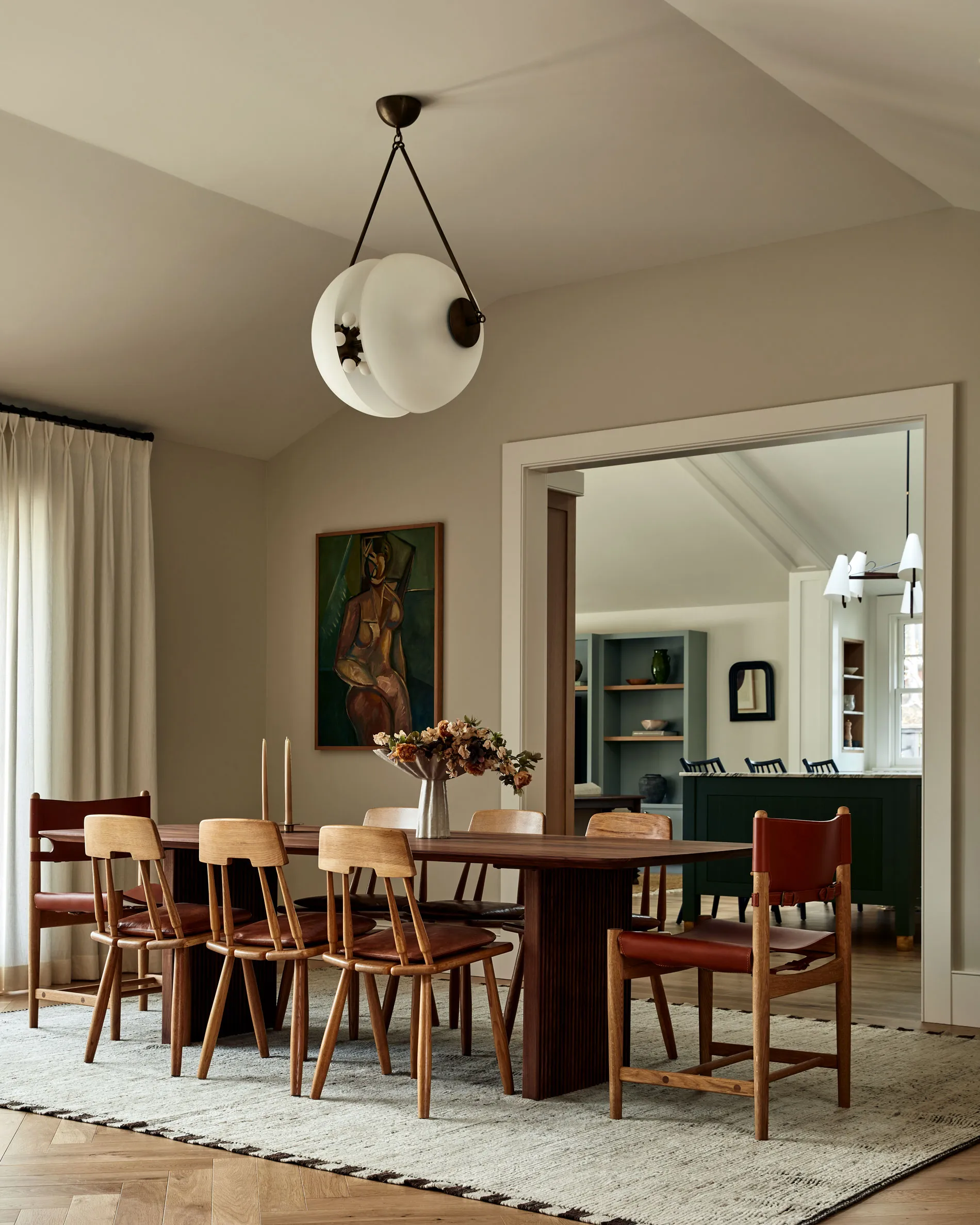
Why Classical Architecture Belongs in the Bay Area
Barbara Chambers makes the case for classical residential design in Marin County — what it involves, and why it ages better than any other approach.
Key Takeaways
- Classical architecture has deep roots in the Bay Area — it is not nostalgia but a response to place, light, and how people want to live.
- The region's built history includes Beaux-Arts civic buildings, Georgian Revival homes, and Spanish Colonial residences that predate the modernist tradition.
- Classical design is governed by proportion and symmetry, not heavy ornamentation — the best results are often "quiet classical," felt rather than announced.
- Classical homes age better than almost any other residential style: the materials develop character, and the proportions remain as right in fifty years as on the day of completion.
- Executing classical work well requires craftspeople and fabricators with specialist knowledge — relationships built over decades, not sourced from a catalog.
People are often surprised when they learn our office is in Mill Valley. The assumption — reasonable, given the Bay Area's reputation — is that serious architecture here means glass boxes, exposed concrete, and cantilevered decks hovering over canyon edges. The region has produced extraordinary work in that tradition. But it has never been the only tradition, and for the clients we serve, it is rarely the right one.
I founded Chambers + Chambers in 1996 with a conviction I still hold: that classical architecture is not a style imported from somewhere else. In the Bay Area, it is a response to place — to the redwood hillsides of Marin, to the fog that softens morning light over the bay, to the particular way that permanence and beauty become more meaningful in a landscape that feels, at times, almost too transient to hold onto.
What I mean by classical architecture matters here. I am not talking about reproduction, pastiche, or a slavish copying of European forms. I mean design rooted in proportion, symmetry, and the grammar of the classical orders — adapted, always, to the site, the climate, and the life of the people who will live in the house.
The Bay Area Has Always Had a Classical Thread
The dominant narrative about Bay Area architecture is modernist, and it deserves its reputation. But the region's built history is more layered than that story allows.
When professional architects first arrived in Northern California in the late 19th century, they brought classical and Gothic Revival traditions with them from the East and Midwest. The Beaux-Arts grandeur of San Francisco's civic buildings, the Mediterranean and Spanish Colonial Revival homes that spread across Marin and the Peninsula in the early 20th century, the Georgian and Colonial houses that still anchor Ross, San Anselmo, and Kentfield's most established streets — none of these are anomalies. They are part of the region's architectural DNA, documented by the National Park Service's survey of Bay Area architectural history.
Mill Valley, specifically, has always held this duality. The town grew up around the redwoods, and its older neighborhoods contain a genuine mix: Craftsman bungalows, shingle-style cottages, and classically detailed homes that feel entirely at home among the trees. The landscape does not demand a single architectural response. It asks only that the response be honest and considered.
What I find, working here, is that clients who come to us have often already lived in a beautifully executed modern home. They know what that life feels like. What they are looking for now is something different: warmth, detail, a sense that the house was made by hand and made to last.
Classical Architecture and the Marin Landscape
There is a particular quality of light in Marin County that I have never seen described adequately in print. It arrives differently than San Francisco light — softer in the mornings, more golden in the late afternoon, filtered through the bay and the hills and the eucalyptus. Classical architecture responds to that light in ways that flat, undifferentiated surfaces simply cannot.
Moldings cast shadows. Columns create rhythm. A well-proportioned pediment over an entrance reads differently at 8am than at 4pm — and that variation is not incidental. It is the point. The classical tradition evolved in part as a response to Mediterranean light, and that sensibility translates naturally to the coastal California climate.
What Classical Design Actually Involves
I want to be specific here, because "classical architecture" can mean very different things depending on who is using the term.
At Chambers + Chambers, classical design begins with proportion. Every element of a house is governed by a system of ratios developed and refined over centuries. The height of a room relative to its width, the scale of windows relative to the wall, the relationship between a column's base and its capital — all of it is deliberate. This is not arbitrary. These proportions exist because they work: they create spaces that feel right to the human body and eye, even when the observer cannot articulate why.
From that foundation, the vocabulary expands:
- Symmetry and balance in the facade, creating a sense of order and calm that carries through the interior
- Cornices, moldings, and entablatures that articulate the transition between wall and ceiling, floor and wall, interior and exterior
- Classical columns and pilasters used structurally or ornamentally to define space and create hierarchy
- Coffered ceilings and paneled walls that add depth and shadow to interior rooms
- Natural materials — stone, plaster, hardwood, terracotta — that age well and develop character over time
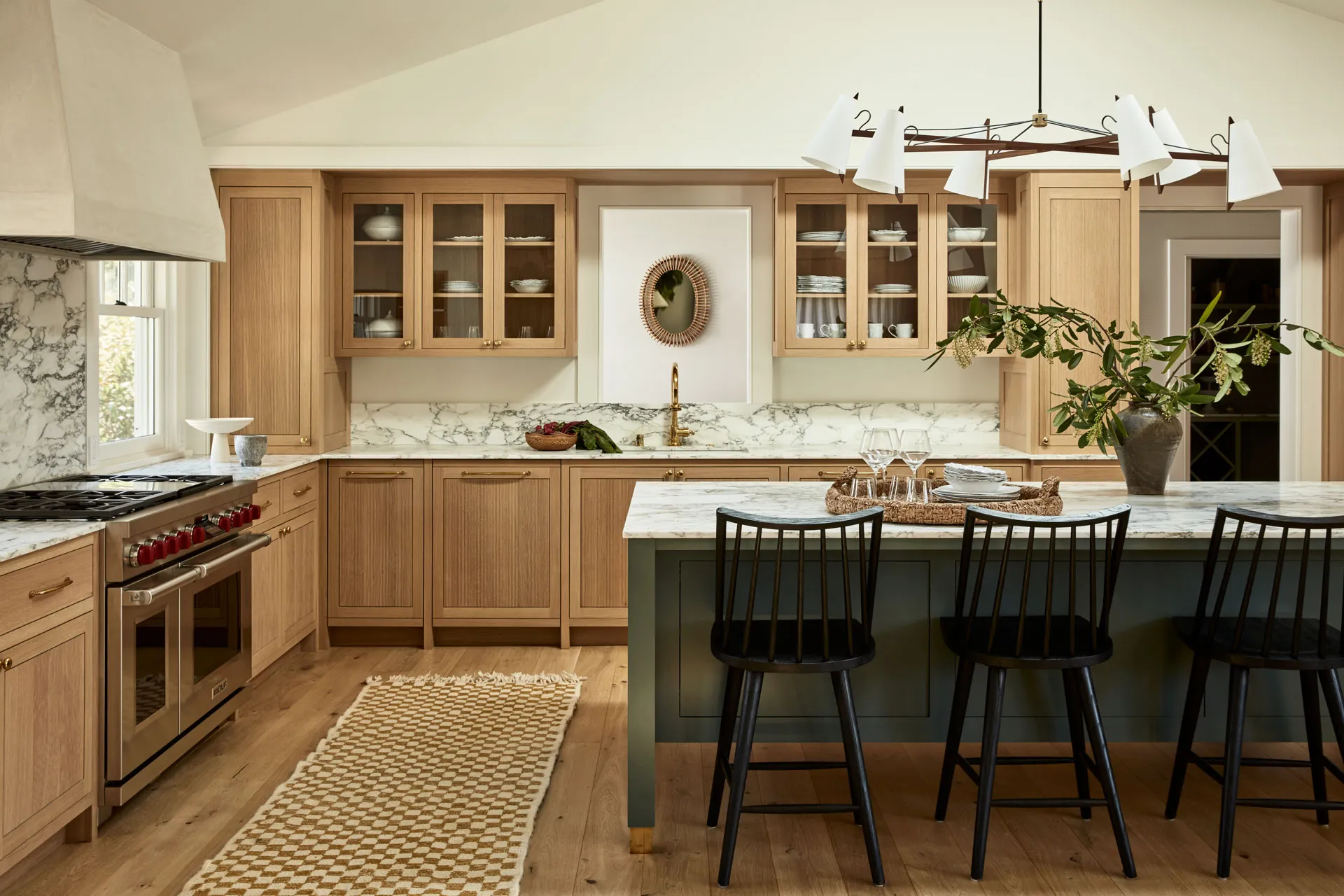
None of these elements need to be applied literally or uniformly. A house can be deeply classical in its proportions and spatial logic while remaining restrained in its ornamentation. Some of our most successful projects in Marin have been what I would call "quiet classical" — homes where the discipline is felt rather than announced, where a visitor might simply describe the space as "beautiful" without being able to name exactly why.
The Interior Is Where Classical Architecture Lives
Exterior classical design is visible from the street. Interior classical design is where clients actually spend their lives, and it deserves equal attention.
The rooms I am most proud of in our portfolio are the ones where proportion and detail work together to create a particular quality of inhabitation. A library with floor-to-ceiling bookshelves, a paneled overmantel, and a coffered ceiling does not just look good — it changes how you feel inside it. There is a sense of enclosure and warmth that no amount of high-end furniture can manufacture if the architecture itself does not provide the container.
This is the argument I make to every client who asks whether classical interiors feel too formal for the Bay Area lifestyle: formality is not the goal. Refinement is. And refinement is entirely compatible with how people in Marin actually live — with dogs and children and dinner parties that end late and mornings that start slowly with good coffee and the sound of the creek outside.
Why Mill Valley Is the Right Place to Practice This Work
I chose Mill Valley deliberately when I established the firm, and I have never had reason to reconsider. The town has a quality that is rare in the Bay Area: it takes beauty seriously without taking itself too seriously. There is genuine civic pride in the older buildings, in the gardens, in the way the streets follow the topography rather than fighting it. Clients here tend to be people who have thought carefully about how they want to live — and who understand that a house is one of the most consequential decisions they will ever make.
Working from Mill Valley also means we are embedded in Marin County's network of craftspeople, contractors, and specialty tradespeople who understand what classical work requires. A classical cornice is not something you can delegate to a standard millwork catalog. It requires a fabricator who understands profile, scale, and shadow. Over nearly 30 years, we have built relationships with the people who can execute this work at the level it deserves.
"A house is a machine for living in," Le Corbusier famously declared. I understand what he meant — but I have never believed it. A house is a place for living in. The difference is not semantic. It shapes every decision, from the first sketch to the final coat of paint.
The clients who find us are usually looking for something they have struggled to name. They know they want a home that feels different from the new construction they have toured — more grounded, more particular, more theirs. Classical architecture gives that feeling a vocabulary and a structure. It is not about recreating the past. It is about building something that belongs to the present and will still be beautiful in fifty years.
Designing for the Long Term
One thing I have observed over decades of practice is that classical homes age better than almost any other residential style. The proportions that make a classical room feel right in 2026 are the same proportions that made rooms feel right in 1926. The materials — plaster, stone, hardwood — develop patina and character rather than simply showing wear.
This matters enormously in the Bay Area, where real estate is a significant investment and where clients are building homes they intend to pass on. A house designed with classical discipline is not just beautiful on the day it is completed. It is beautiful on the day it is sold, inherited, or photographed for a magazine thirty years later.
We have had the privilege of seeing several of our early projects reach that stage. The houses look better now than they did when we finished them. That is the best argument I know for this approach.
Frequently Asked Questions
What is classical architecture in residential design? Classical residential architecture is design rooted in proportion, symmetry, and the grammar of the classical orders — cornices, moldings, columns, coffered ceilings, and natural materials. It is not reproduction or pastiche, but a disciplined approach to creating spaces that feel right to the human body and eye.
Is classical architecture appropriate for Bay Area homes? Yes. The Bay Area has a long classical tradition — from Beaux-Arts civic buildings to Georgian and Colonial Revival homes in Ross, Kentfield, and San Anselmo. Classical design responds naturally to Marin's light and landscape, and many of the region's most enduring homes are classically detailed.
How does classical architecture differ from modern architecture? Classical architecture is governed by proportion, symmetry, and historical ornamental vocabulary. Modern architecture prioritizes minimal form, open plans, and industrial materials. Classical homes tend to age better and develop character over time, while contemporary styles can date quickly as aesthetic trends shift.
Do classical interiors work for the Bay Area lifestyle? Refinement, not formality, is the goal. Classical interiors — paneled walls, coffered ceilings, detailed moldings — create warmth and enclosure that work well for how people in Marin actually live: casually, with family, and with an eye toward lasting quality rather than trend-driven design.
Why choose a classical architect in Marin County? Classical work requires fabricators, craftspeople, and contractors who understand profile, scale, and shadow. Firms with deep roots in Marin have built those relationships over decades — connections that are essential to executing classical detailing at the level it deserves.
A Conversation Worth Having
If you are considering a custom home in the Bay Area and you find yourself drawn to warmth, proportion, and detail over minimalism and spectacle, I would encourage you to trust that instinct. It is not a conservative impulse or a failure of imagination. It is a considered preference for a way of building that has proven itself across centuries and climates — including this one.
Classical architecture in the Bay Area is not a niche. It is a lineage. And for the right client, on the right site, it produces homes that are genuinely unlike anything else being built here.
We would be glad to talk about what that might look like for your project. You can explore our portfolio or reach out directly to begin a conversation.


